
About AEVO
Engineering discipline for<br>private enterprise AI
AEVO combines AI, machine learning, and Operations Research to build customer-specific decision systems that strengthen operating control, capital efficiency, and free cash flow.
AEVO combines AI, machine learning, and Operations Research to build customer-specific decision systems that strengthen operating control, capital efficiency, and free cash flow.
Too many AI initiatives stop at insight, while the real enterprise problem begins at decision-making: how to act under policy, risk, cost, and execution constraints.
AEVO exists to close that gap. We analyze customer data, build custom algorithms and models, and connect AI, machine learning, and Operations Research so enterprises can improve service, resilience, and free cash flow together.
"If a system cannot be explained, governed, and tied to real operating outcomes, it does not belong in a critical workflow."
We treat model fit, deployment boundaries, and business impact as product requirements.
We combine demand forecasting, optimization, simulation, and policy logic so enterprises can act across inventory, supply chain, energy, and capital decisions with one governed system.
AEVO sits on top of ERP, MES, WMS, finance, and energy systems with customer-specific models, while governance, auditability, and operational continuity remain intact.

This is the operating stack behind AEVO's private decision systems.
We do not treat models as isolated components. AEVO builds custom models on customer data, then connects forecasting, optimization, and simulation so their combined dynamics can improve free cash flow, resilience, and decision speed.
Signal interpretation
Use language models where ambiguity is highest: contracts, communications, policy text, incident notes, and operator queries.
What is likely
Use statistical learning where forecasting, anomaly detection, and probability estimates help teams understand what may happen next.
What should happen
Use Operations Research to make trade-offs explicit and keep hard business constraints visible in the final recommendation.
What gets carried out
Use agents to operationalize approved actions with monitoring, escalation, and control boundaries appropriate for the workflow.
Enterprise AI should improve free cash flow and resilience without becoming a black box to operators, auditors, or executives.
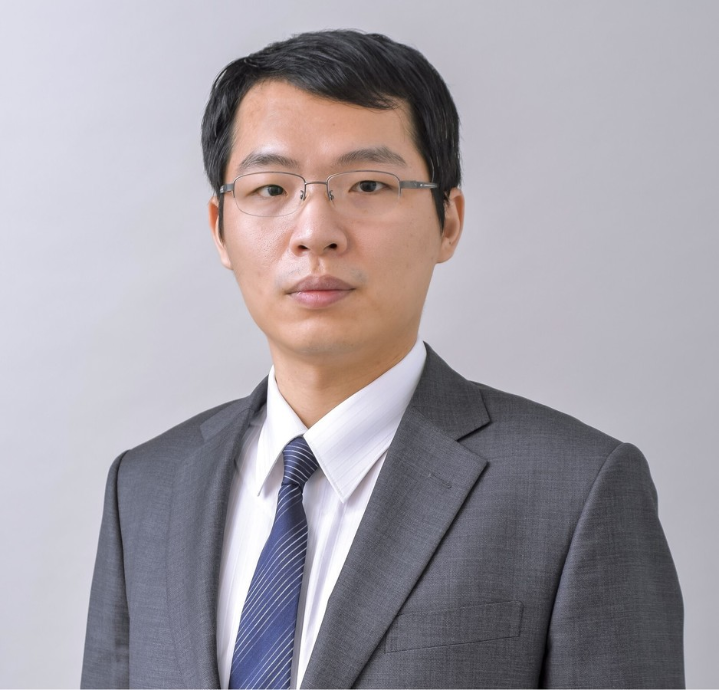
Dr. Tsai's work spans stochastic systems, quantitative finance, supply chain optimization, and enterprise deployment. His focus is turning advanced models into private, production-ready systems for inventory, logistics, energy trading, cash flow, and portfolio risk decisions.
"Reliability is not an enhancement. It is part of the design brief."
Dr. YuLi Tsai
We model decisions where volatility, constraints, and competing objectives make simplistic automation unsafe or insufficient.
We design for interconnected workflows where a decision in one function moves cost, service, and risk somewhere else.
We treat deployment boundary, data residency, and governance architecture as part of the solution, not post-project cleanup.
These principles are the operating constraints behind our own work.
We define who must act, what constraints matter, and what outcome changes the business before choosing a technical approach.
Policy boundaries, approvals, and escalation logic should live in the workflow, not outside it in manual cleanup.
A solution matters when it improves a real operating or financial outcome, not when it creates the most noise.
Teams adopt better systems faster when assumptions, trade-offs, and control points stay visible.
If you are evaluating where private AI and custom models belong in your operations, we can help define the workflow, the data layer, and the deployment boundary that matter most.
Schedule a strategy session →